
memos
Privacy-first, self-hosted note-taking platform with markdown support, tagging, and built-in AI — a lightweight alternative to Notion and Obsidian.
Open source alternative to:
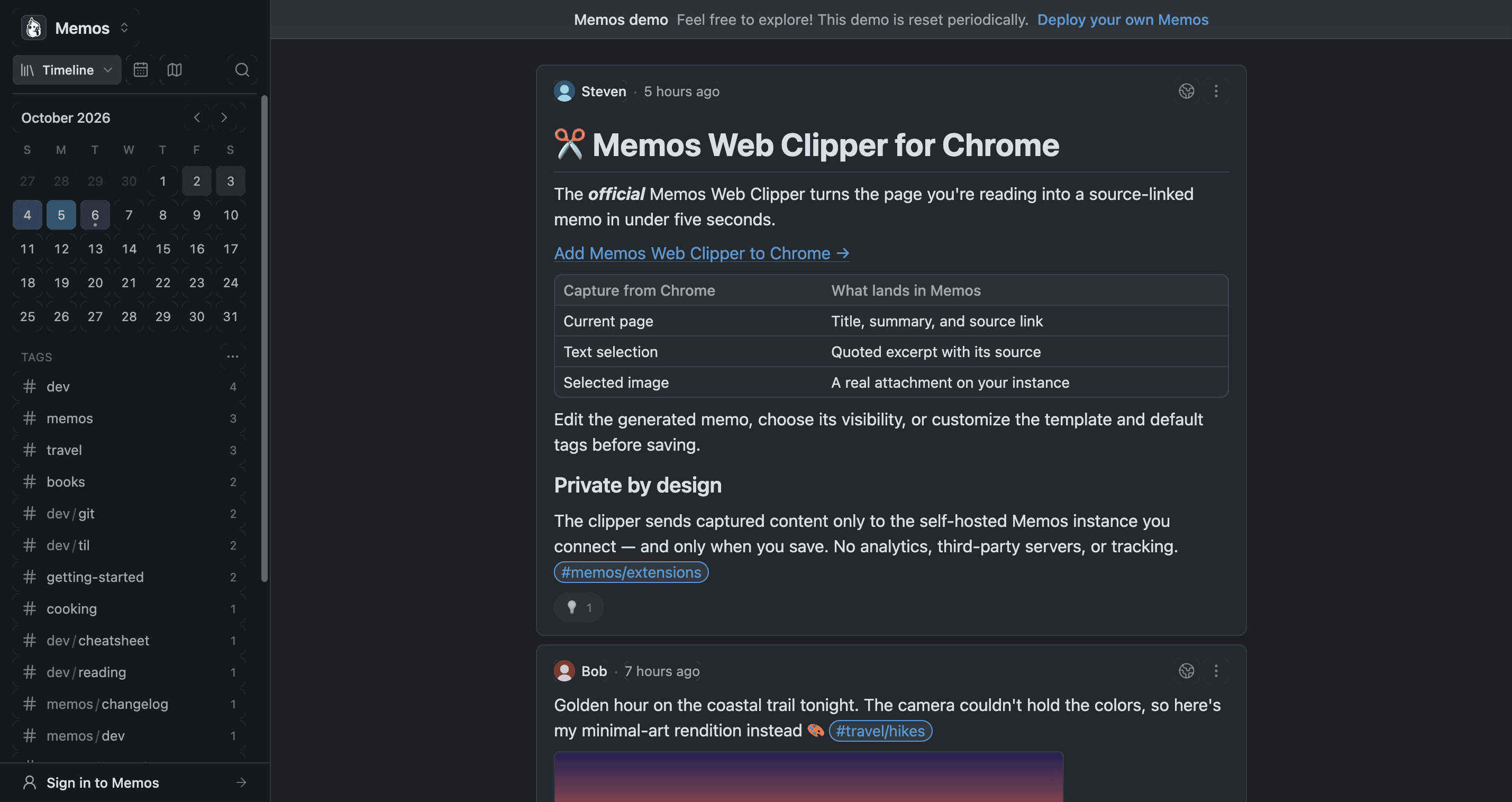
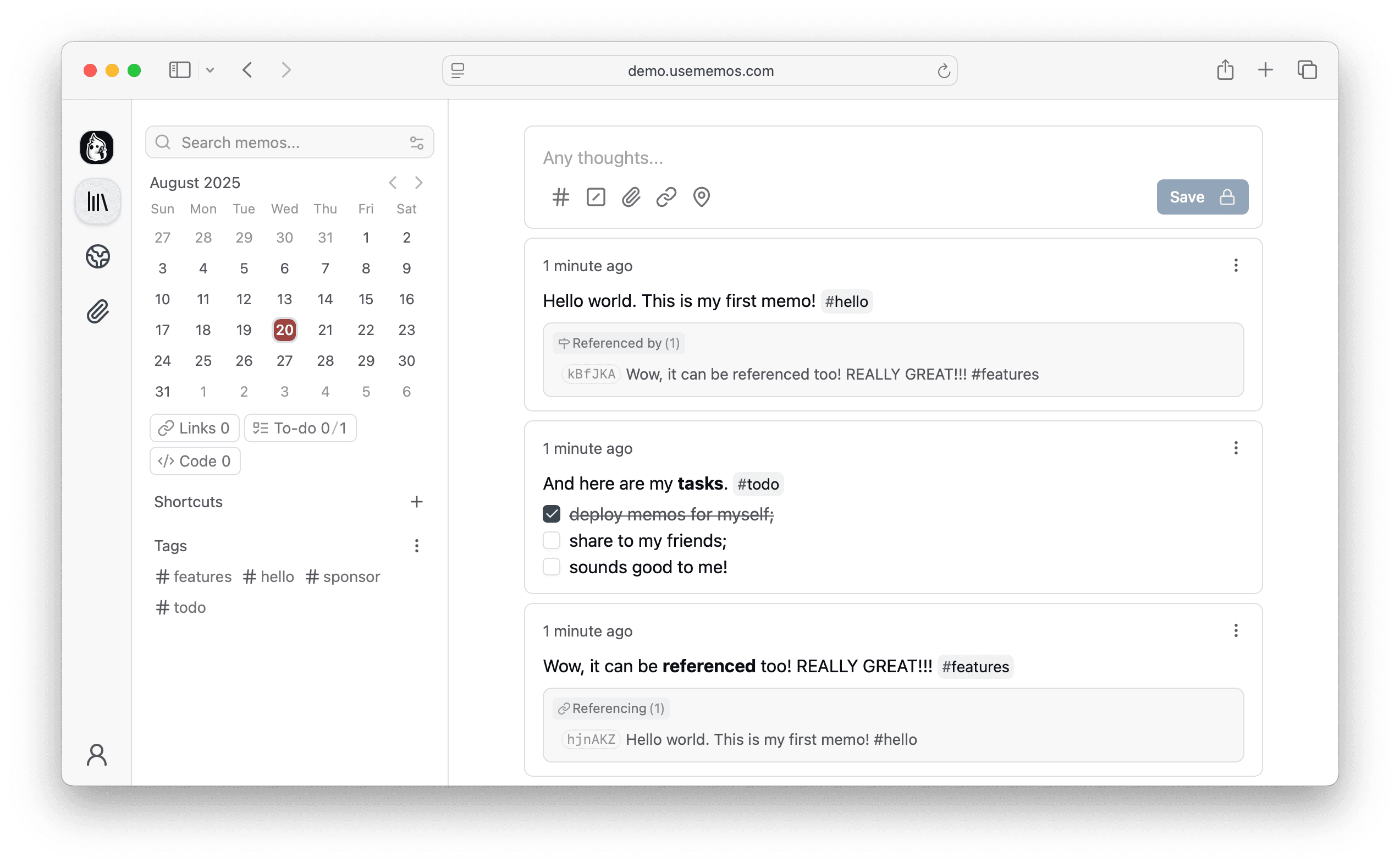
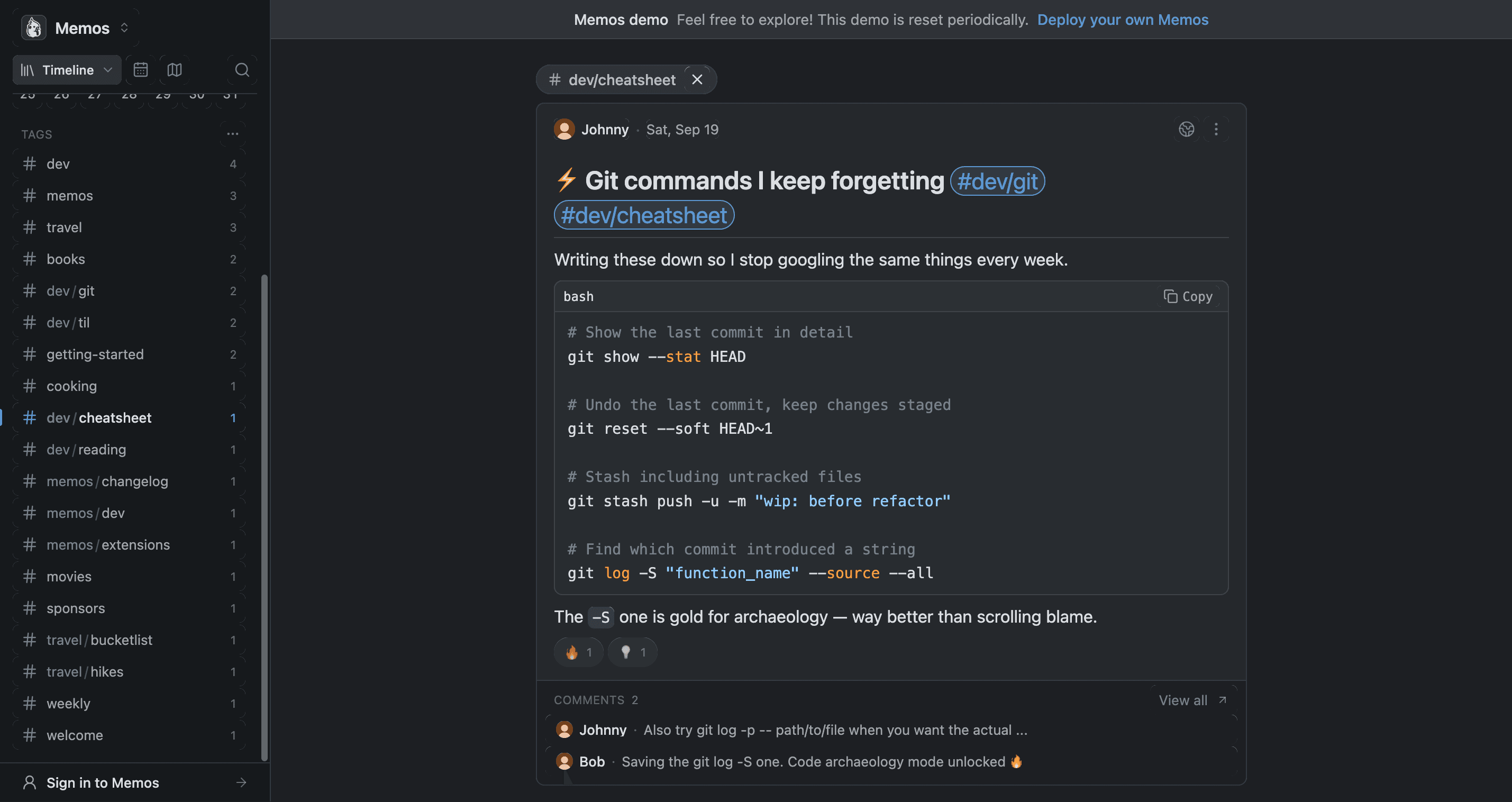
Memos is an open-source, self-hosted note-taking platform built for capturing and organizing thoughts quickly. Written in Go with a React frontend, it runs as a single lightweight binary and can be deployed in minutes via Docker. Every note is stored in your own database, giving you full ownership of your data without relying on third-party cloud services.
Notes are written in plain markdown with support for tags, mentions, and inline formatting. Memos includes a built-in AI assistant powered by local or remote LLMs for summarization, tagging, and semantic search, while remaining fully functional offline. The web UI is fast and minimalist, with keyboard shortcuts, dark mode, and a mobile-friendly responsive layout that works well across devices.
With an active community and 60k+ stars on GitHub, Memos strikes a balance between the structure of a knowledge base and the simplicity of a quick-capture journal. It is MIT-licensed and ideal for individuals and small teams who want a private, low-maintenance alternative to Notion, Obsidian, or Evernote.
Categories:
Build with:

Frequently Asked Questions
Is memos a Notion replacement?
Memos is deliberately not a Notion replacement. It is a self-hosted, timeline-first capture tool — closer to a private microblog or a journaling feed than a workspace. The team is explicit that it is "not a workspace, not a second brain," and instead optimizes for quickly jotting a thought, tagging it, and moving on, with Markdown-native notes and optional tasks.
How easy is it to self-host memos?
Memos is a single Go binary (with a React/TypeScript frontend) that runs from one Docker command: docker run -d --name memos -p 5230:5230 -v ~/.memos/:/var/opt/memos neosmemo/memos:stable. It supports SQLite for small installs, plus MySQL and PostgreSQL for production, and a one-liner curl | sh installer is also provided. Docker Compose, Kubernetes Helm charts, and source builds are documented at usememos.com/docs.
Does memos have mobile or desktop apps?
Memos is primarily a web app you self-host at http://your-host:5230, and it is intentionally lightweight enough to use from a phone browser. The project also ships an official browser web clipper to save pages, selections, and images directly to your instance, and the codebase exposes REST and gRPC APIs for community-built mobile and CLI clients.
What does memos cost?
Memos is MIT-licensed and free to self-host with no paid feature gates or per-seat pricing, because you bring the infrastructure. The Docker image and the neosmemo/memos:stable tag are the supported deployment channels, and the only ongoing cost is the server you run it on — anywhere from a Raspberry Pi to a VPS.
OpenAltFinder Score
Project Details
Repository details
Updated 10/11/2026, 4:00:17 AM
View RepositoryRepository activity
Compare memos with
Similar open source alternatives

Jotted
Self-hosted tasks and notes management with offline support, push reminders, and full-text search in a single Docker container.
 Notion
Quillpad
A free, open-source Android app for markdown notes and task lists with reminders, file attachments, and optional Nextcloud sync.
 Google Keep
Focalboard
Focalboard is an open-source, self-hosted project management tool — a free alternative to Trello, Notion, and Asana for boards, docs, and team planning across every workflow.
 Trello
Files.md
A simple local-first note-taking app for your plain .md files with Telegram bot access.
Notion
Joplin
Privacy-focused, open-source note-taking and to-do app with end-to-end encryption and multi-device sync.
 Evernote
Atomic
A self-hosted personal knowledge base that turns markdown notes into an AI-augmented knowledge graph with semantic search and wiki synthesis.
 Pinboard