
Kimai
Open source time-tracking application for freelancers, teams, and organisations, with timesheets, invoicing, and detailed reports.


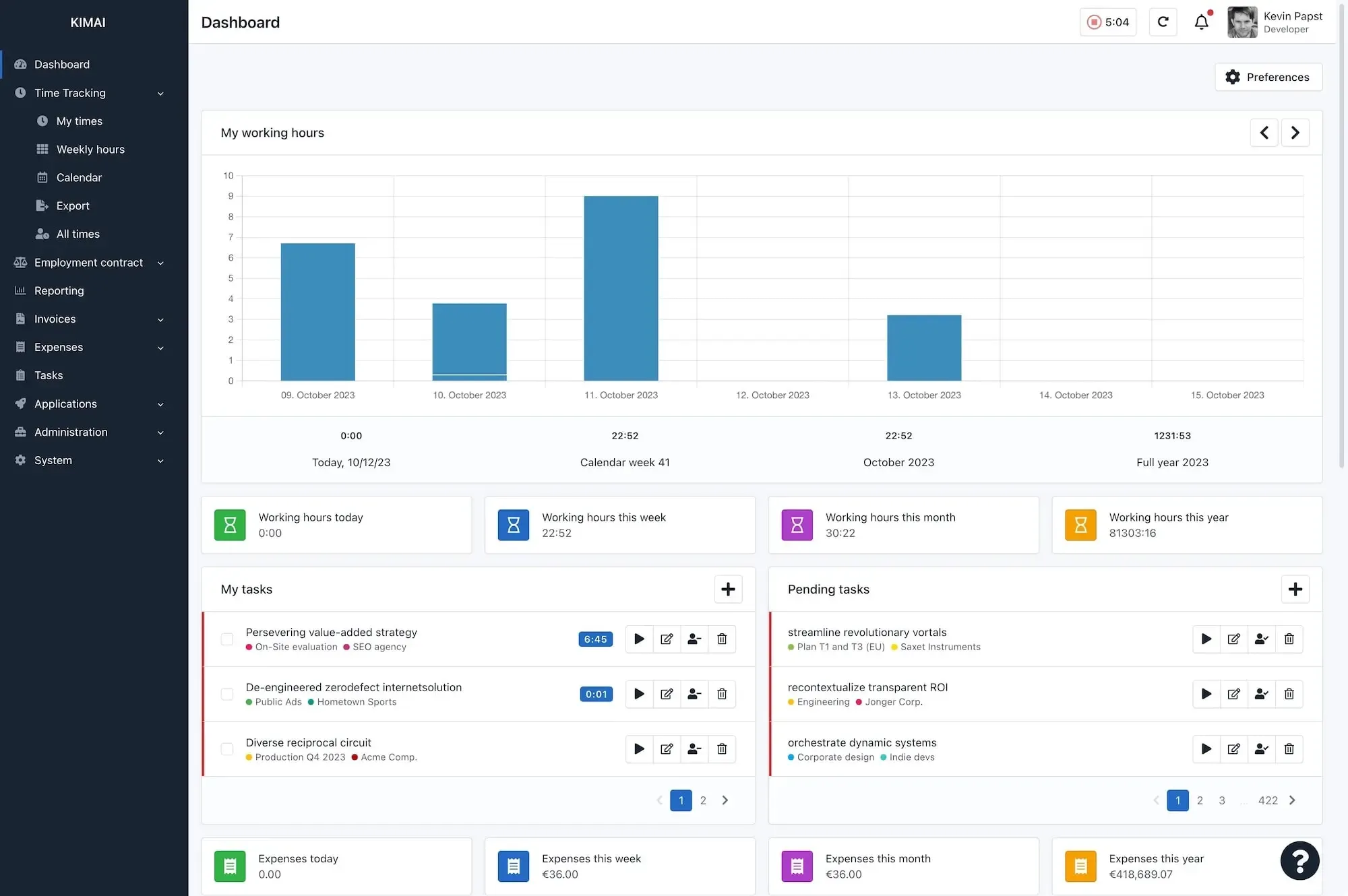
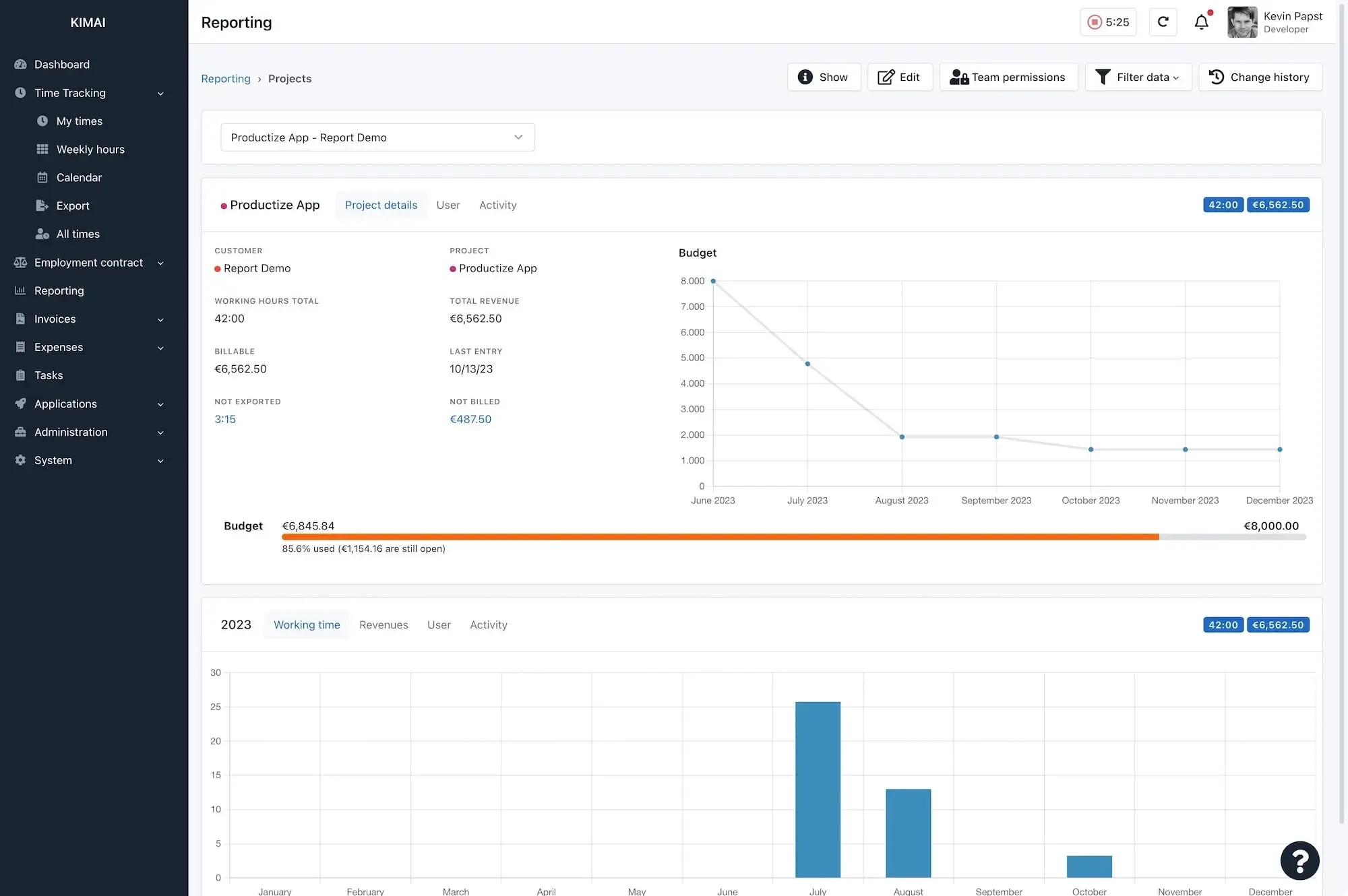
Kimai is a free, open source time-tracking application that has been actively maintained for almost two decades. It is a popular alternative to Toggl Track, Harvest, and Clockify for freelancers, agencies, and small companies that want to track billable hours and generate invoices.
Kimai offers a web-based multi-user interface, projects and activities with hourly rates, customer and team reports, JSON API for integrations, and a powerful plugin system. It supports exporting to PDF, XLSX, CSV, and direct invoicing workflows. A self-hosted community edition is fully free, while the vendor offers a SaaS option and optional paid support contracts.
It is built on PHP, Symfony, and Doctrine, runs on MySQL or MariaDB, and is released under AGPL-3.0. Kimai is translated into dozens of languages and is a mature, well-documented choice for time tracking without a subscription.
Categories:




Frequently Asked Questions
What are the server requirements for self-hosting Kimai?
Kimai needs PHP 8.2 or newer (8.3, 8.4, and 8.5 are supported), MariaDB 10.6 or MySQL 8.4 or newer, and a web server serving Kimai from its own subdomain, since subdirectory installs are not supported. The gd, intl, json, mbstring, pdo, tokenizer, xml, xsl, and zip PHP extensions must be enabled.
What authentication options does Kimai support?
Kimai can authenticate users against its own database, LDAP, or SAML, and supports two-factor authentication with TOTP authenticator apps. Roles and team permissions are configurable, so access to customers, projects, and reports can be scoped per user or team.
Can Kimai create invoices from tracked time?
Yes. Kimai records rates per user, customer, and project, then generates invoices from the tracked timesheets. It also supports money and time budgets, exports, and reporting over the recorded data.
Does Kimai have an API, plugins, and integrations?
Kimai exposes a JSON API that third-party tools and scripts can use, and it has a plugin marketplace with both free and paid plugins. A documented plugin API lets developers add features such as custom reports, export formats, or authentication providers.
Does Kimai support multiple users and languages?
Yes. Kimai is a multi-user application with per-user timezones and more than 30 interface translations maintained through Weblate. Freelancers can run it for themselves, and companies can manage dozens or hundreds of users in one instance with role-based permissions.
Looking for contributors
This project is actively seeking help, join the community!
OpenAltFinder Score
Project Details
Repository details
Updated 11/24/2026, 8:01:07 PM
View RepositoryRepository activity
Sponsor Kimai
Get the latest open source alternatives delivered weekly.
Discover tools that give you freedom from proprietary software.
Compare Kimai with
Similar open source alternatives

ActivityWatch
Local-first automatic time tracker that records app, window, and browser activity on desktop and Android.
 RescueTime

Ever Gauzy
Open source ERP/CRM/HRM platform with time tracking, invoicing, payroll, and project management for teams and freelance networks.
 NetSuite

Super Productivity
Open-source to-do list and time tracker with timeboxing, a daily planner, Pomodoro focus sessions, and integrations for Jira, GitHub, and GitLab.
 Todoist

TimeTracker
A robust, self-hosted time tracking application designed for teams and freelancers who need reliable time management without cloud dependencies. Built with Flask and optimized for Raspberry Pi deployment, TimeTracker provides persistent timers, comprehensive reporting, and a modern web interface.
 Toggl

Clockoli
Git-native time tracking browser extension that keeps your timesheets in a private GitHub repository you control.
Toggl
Solidtime
Modern, open source time-tracking app for freelancers and teams with project, client, task, and reporting features.
Toggl